The number of days when the weather gets hot, dry and windy - ideal to spark extreme wildfires - has nearly tripled in the past 45 years across the globe, with the trend increasing even higher in the Americas, a new study shows. And more than half of that increase is caused by human-caused climate change, researchers calculated. What this means is that as the world warms, more places across the globe are prone to go up in flames at the same time because of increasingly synchronous fire weather, which is when multiple places have the right conditions to go up in smoke. Countries may not have enough resources to put out all the fires popping up and help won't be as likely to come from neighbours busy with their own flames, according to the authors of a study in Wednesday's Science Advances. In 1979 and for the next 15 years, the world averaged 22 synchronous fire weather days a year for flames that stayed within large global regions, the study found. In 2023 and 2024, it was up to more than 60 days a year. "These sorts of changes that we have seen increase the likelihood in a lot of areas that there will be fires that are going to be very challenging to suppress," said study co-author John Abatzoglou, a fire scientist at the University of California, Merced. The researchers didn't look at actual fires, but the weather conditions: warm, with strong winds and dry air and ground. "It increases the likelihood of widespread fire outbreaks, but the weather is one dimension," said study lead author Cong Yin, a fire researcher at University of California, Merced. The other big ingredients to fires are oxygen, fuel such as trees and brush, and ignition such as lightning or arson or human accidents. This study is important because extreme fire weather is the primary - but not only - factor in increasing fire impacts across the globe, said fire scientist Mike Flannigan of Thompson Rivers University in Canada, who wasn't part of the study. And it's also important because regions that used to have fire seasons at different times and could share resources are now overlapping, he said. Abatzoglou said, "And that's where things begin to break." More than 60 per cent of the global increase in synchronous fire weather days can be attributed to climate change from the burning of coal, oil and natural gas, Yin said. He and his colleagues know this because they used computer simulations to compare what's happened in the last 45 years to a fictional world without the increased greenhouse gases from burning fossil fuels. The continental United States, from 1979 to 1988, averaged 7.7 synchronous fire weather days a year. But in the last 10 years that average was up to 38 days a year, according to Yin. But that is nothing compared to the southern half of South America. That region averaged 5.5 synchronous fire weather days a year from 1979 to 1988; over the last decade, that's risen to 70.6 days a year, including 118 days in 2023. Of 14 global regions, only Southeast Asia saw a decrease in synchronous fire weather, probably because it is getting more humid there, Yin said. This story has been sourced from a third party syndicated feed, agencies. Mid-day accepts no responsibility or liability for its dependability, trustworthiness, reliability and data of the text. Mid-day management/mid-day.com reserves the sole right to alter, delete or remove (without notice) the content in its absolute discretion for any reason whatsoever.
20 February,2026 01:37 PM IST | Washington | APHumans have a soft spot for animals of all kinds, and looking at their pictures, or listening to their stories always brings joy to all of us. It also works the other way around when something bad happens to them, saddening us immediately. Such has been the story of Punch the monkey, who has been going viral on social media, after photographs and videos of him sitting lonely with a stuffed toy went viral, making everybody around the world feel sorry for him, and wishing the best for him. Who is Punch? Punch is a 7 month-old male macaque monkey, who was abandoned by his mother shortly after birth. He was reportedly born in July 2025, and is called 'Punchi-kun' in Japanese. He has been mixing with other macaques, but is still attached to his soft toy. Why is Punch going viral? Pictures of Punch sitting time with a stuffed orangutan toy at Ichikawa City Zoo and Botanical Gardens in Chiba Prefecture in Japan went viral two days ago on social media. After the story of the lonely monkey went viral, IKEA Japan has reportedly donated stuffed toys to help keep Punch company. Moo Deng goes viral In 2025, Moo Deng, a baby pygmy hippo from Thailand's Khao Kheow Open Zoo went viral on social media through photos that were shared by many people, and the zoo, leaving everybody fawning over the animal.
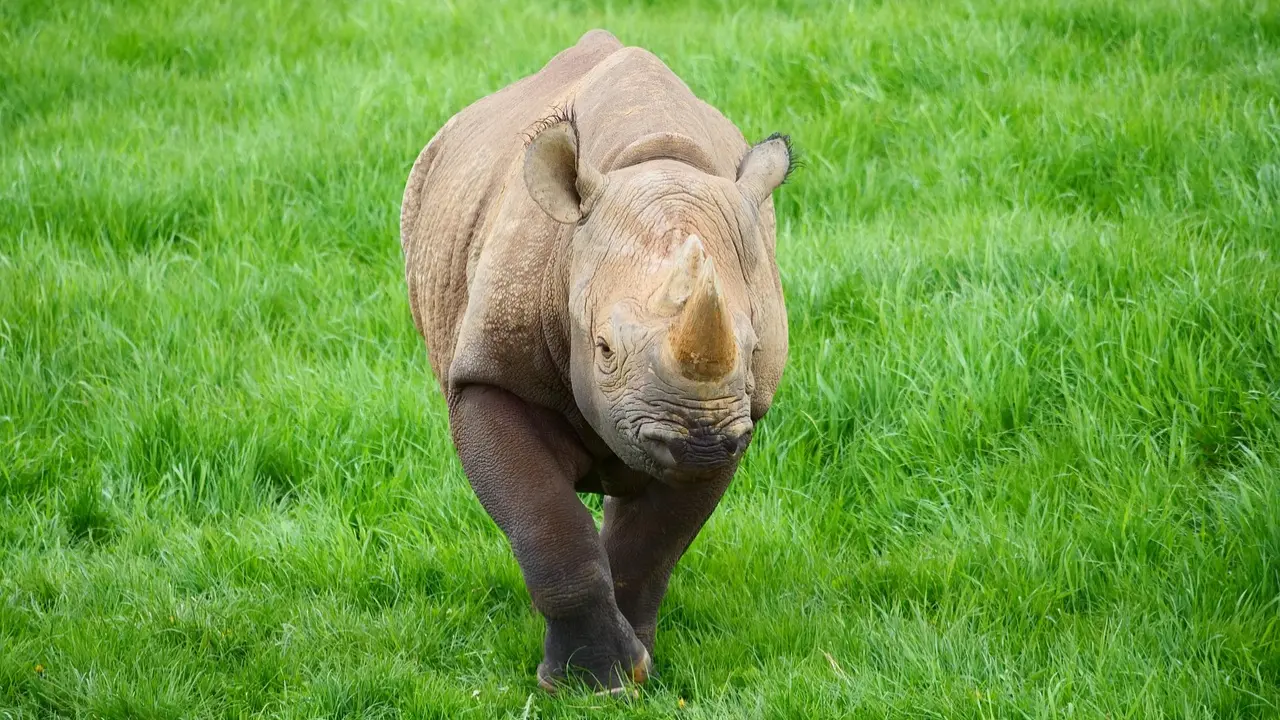
20 February,2026 11:52 AM IST | Mumbai | mid-day online correspondentThe carcass of a male rhinoceros was recovered from inside the Pobitora Wildlife Sanctuary in Assam's Morigaon district, forest officials said. Pranjal Baruah, Forest Range Officer at Pobitora Wildlife Sanctuary, on Wednesday told ANI that the rhino died of natural causes and that the horn was recovered for safekeeping. "On Wednesday, a carcass of a male rhino with the horn intact was recovered by field staff at Jugdol Camp area inside the wildlife sanctuary while on regular duty," Pranjal Baruah said. Following the discovery, a forest team led by the Range Officer rushed to the spot and recovered the carcass from the bank of Chitalmari beel. "Later, the necessary post-mortem was done, and the horn was recovered for safe custody. According to the veterinary officer at the Assam State Zoo and Botanical Garden, the male rhino, aged about 40, died of natural causes. The carcass was disposed of after taking necessary samples for further analysis," Pranjal Baruah said. Rhino attack kills forest home guard in Assam Meanwhile, in a separate incident, a forest home guard was killed, and another was injured after they were attacked by a rhino in Kaziranga National Park and Tiger Reserve on Sunday, officials said. The deceased forest guard was identified as Sahabuddin. According to the Kaziranga National Park authority, the incident took place near the Bordoloni Forest Camp in the Kohora Range. Arun Vignesh, CS, DFO, and Deputy Director of Kaziranga National Park, said the rhino attacked the staff members at around noon while they were on duty. "One of our staff members, Sahabuddin, a homeguard posted in Bordoloni Camp of Kohora Range, was attacked by a rhino at about 12 noon while on duty and passed away while being brought to Kohora hospital," Arun Vignesh said. "In the same incident, another staff member, Ramen Borah, was injured and is currently being shifted to Jorhat Medical College & Hospital for treatment," he added. Tiger carcass found in Kaziranga National Park Earlier in January, a female tiger carcass was discovered on Sunday, January 4, in the Paschim Bimoli area of the Western Range Bagori of Assam's Kaziranga National Park & Tiger Reserve. The carcass was found within the protected area, and the death appeared to be a result of natural conflict. Preliminary findings from the examination strongly suggest that the tigress died due to infighting, a common natural cause. This story has been sourced from a third party syndicated feed, agencies. Mid-day accepts no responsibility or liability for its dependability, trustworthiness, reliability and data of the text. Mid-day management/mid-day.com reserves the sole right to alter, delete or remove (without notice) the content in its absolute discretion for any reason whatsoever.
19 February,2026 01:01 PM IST | Morigaon (Assam) | ANIAn ungainly barrel of a shark cruising languidly over a barren seabed far too deep for the sun's rays to illuminate was an unexpected sight. Many experts had thought sharks didn't exist in the frigid waters of Antarctica before this sleeper shark lumbered warily and briefly into the spotlight of a video camera, researcher Alan Jamieson said this week. The shark, filmed in January 2025, was a substantial specimen with an estimated length of between 3 and 4 meters (10 and 13 feet). "We went down there not expecting to see sharks because there's a general rule of thumb that you don't get sharks in Antarctica," Jamieson said. "And it's not even a little one either. It's a hunk of a shark. These things are tanks," he added. The camera operated by the Minderoo-UWA Deep-Sea Research Centre, which investigates life in the deepest parts of the world's oceans, was positioned off the South Shetland Islands near the Antarctic Peninsula. That is well inside the boundaries of the Antarctic Ocean, also known as the Southern Ocean, which is defined as below the 60-degree south latitude line. The center on Wednesday gave The Associated Press permission to publish the images. The shark was 490 meters (1,608 feet) deep where the water temperature was a near-freezing 1.27 degrees Celsius (34.29 degrees Fahrenheit). A skate appears in frame motionless on the seabed and seemingly unperturbed by the passing shark. The skate, a shark relative that looks like a stingray, was no surprise since scientists already knew their range extended that far south. Jamieson, who is the founding director of the University of Western Australia-based research center, said he could find no record of another shark found in the Antarctic Ocean. Peter Kyne, a Charles Darwin University conservation biologist independent of the research center, agreed that a shark had never before been recorded so far south. Climate change and warming oceans could potentially be driving sharks to the Southern Hemisphere's colder waters, but there was limited data on range changes near Antarctica because of the region's remoteness, Kyne said. The slow-moving sleeper sharks could have long been in Antarctica without anyone noticing, he said. "This is great. The shark was in the right place, the camera was in the right place and they got this great footage," Kyne said. "It's quite significant." The sleeper shark population in the Antarctic Ocean was likely sparse and difficult for humans to detect, Jamieson said. The photographed shark was maintaining a depth of around 500 meters (1,640 feet) along a seabed that sloped into much deeper water. The shark maintained that depth because that was the warmest layer of several water layers stacked upon each other to the surface, Jamieson said. The Antarctic Ocean is heavily layered, or stratified, to a depth of around 1,000 meters (3,280 feet) because of conflicting properties including colder, denser water from below not readily mixing with fresh water running off melting ice from above. Jamieson expects other Antarctic sharks live at the same depth, feeding on the carcasses of whales, giant squids and other marine creatures that die and sink to the bottom. There are few research cameras positioned at that specific depth in Antarctic waters. Those that are can only operate during the Southern Hemisphere summer months, from December through February. "The other 75 per cent of the year, no one's looking at all. And so this is why, I think, we occasionally come across these surprises," Jamieson said. This story has been sourced from a third party syndicated feed, agencies. Mid-day accepts no responsibility or liability for its dependability, trustworthiness, reliability and data of the text. Mid-day management/mid-day.com reserves the sole right to alter, delete or remove (without notice) the content in its absolute discretion for any reason whatsoever.
18 February,2026 03:29 PM IST | Melbourne | APAn elephant calf succumbed to injuries on Tuesday after being hit by a goods train in Jharkhand's Latehar district, an official said. The calf, part of a herd of about 12 elephants, was crossing a railway track near Malhan village between Mahuamilan and Nindra stations around 8 pm on Monday, when the train hit the animal. "The calf was seriously injured. It was being treated but succumbed on Tuesday," Latehar Divisional Forest Officer (DFO) Agarwal told PTI. He said the postmortem examination of the calf is being done. After the accident, train movement on the track was affected for several hours, and it resumed on early morning on Tuesday, a railway official said. This story has been sourced from a third party syndicated feed, agencies. Mid-day accepts no responsibility or liability for its dependability, trustworthiness, reliability and data of the text. Mid-day management/mid-day.com reserves the sole right to alter, delete or remove (without notice) the content in its absolute discretion for any reason whatsoever.
17 February,2026 04:06 PM IST | Latehar (Jharkhand) | PTIThe Rushikulya river mouth in Odisha's Ganjam district, which is known for the mass nesting of the endangered Olive Ridley Turtles, was found as a potential habitat for Irrawaddy dolphins, a forest officer said on Tuesday. The forest department officials have sighted the congregation of 13 such critically endangered dolphins near Bateshwar under Khallikote forest range during the counting of the sea mammal, he said. The three-day dolphin census was carried out between January 20 and 22. During the survey, the dolphins were observed surfacing and moving in groups within the area, said the forest officer. "The census has indicated the healthy presence of dolphins along the Purunabandh-Prayagi stretch" said Dibya Shankar Behera, assistant conservator of forests (ACF), Khallikote range. Earlier, the forest officials have found other species of dolphins like bottlenose and humpbacks in the area, officials said. The Irrawaddy dolphins, which were sighted in large numbers in the Chilika lake, might have migrated to the Rushikulya river mouth area, they said. People of the nearby villages, especially the fishermen, have been well aware of protecting the Olive Ridley turtles, which visit for mass nesting in the last few years. "Now the villagers are also aware of protecting the other aquatic animals like dolphins and the winged guests. We are creating awareness among the villagers for the protection of Olive Ridley, besides other animals and birds," said the ACF. The sighting of Irrawaddy dolphins near the river mouth has strengthened the importance of the Rushikulya estuary as a biodiversity-rich ecosystem, said Rabindra Nath Sahu, a wildlife activist. The estuary is famous for a major rookery of the Olive Ridley turtles, as thousands of the sea creatures visit the site for their mass nesting during the third week of February. The place has also hosted several migratory birds, especially Bar-headed geese during every winter, he said. As the area is considered as the biodiversity hotspot, Sahu urged the government to take urgent conservation measures for the protection and conservation of the different aquatic animals. This story has been sourced from a third party syndicated feed, agencies. Mid-day accepts no responsibility or liability for its dependability, trustworthiness, reliability and data of the text. Mid-day management/mid-day.com reserves the sole right to alter, delete or remove (without notice) the content in its absolute discretion for any reason whatsoever.
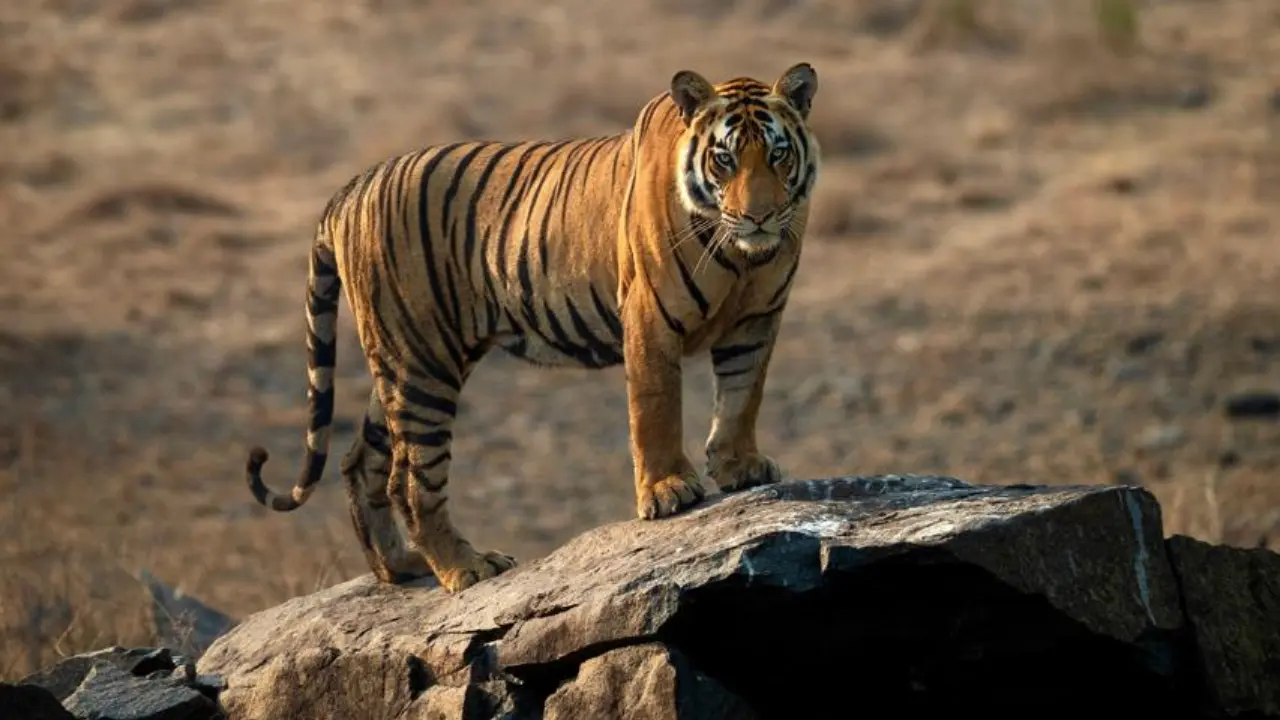
17 February,2026 03:51 PM IST | Berhampur (Odisha) | PTIA male tiger was found dead in the backwaters of Gundal reservoir here in this district, officials said on Monday. The tiger, estimated to be around five-six years old, was found dead by the forest officials who were on patrolling duty on Sunday, they said. Citing preliminary investigation, the forest department officials said that it is suspected that the tiger died after getting caught in a snare trap. Following the Standard Operating Procedures of the National Tiger Conservation Authority, the representatives nominated by NTCA, a nominee of the Principal Chief Conservator of Forests (Wildlife) and Chief Wildlife Warden, Bengaluru, veterinary officer and local representatives inspected the site. The dog squad personel also inspected the spot as part of the probe. The local police were also informed in this regard and post-mortem report is awaited to ascertain the exact cause of death. A wildlife offence case has been registered in connection with the incident and investigation is in progress. This story has been sourced from a third party syndicated feed, agencies. Mid-day accepts no responsibility or liability for its dependability, trustworthiness, reliability and data of the text. Mid-day management/mid-day.com reserves the sole right to alter, delete or remove (without notice) the content in its absolute discretion for any reason whatsoever.
16 February,2026 09:55 PM IST | Chamrajnagar (Karnataka) | PTIResearchers from the Indian Institute of Technology (IIT) Delhi have combined traditional models used to predict streamflow in India's rivers with artificial intelligence, finding that the new approach significantly improved prediction accuracy in 208 of the 220 rivers tested. Accurate information of river flow is critical for water resources management, including irrigation scheduling, reducing flood risk, and reservoir operations. The team, Bhanu Magotra and Manabendra Saharia, said that large-scale hydrological models often produce significant uncertainties in streamflow estimates at local scales unless extensive basin-specific calibration is performed. Such calibration is computationally expensive and challenging to implement across a country as hydrologically diverse as India, they said. Calibration refers to the technique of adjusting a model's output to better align with observed real-world data. The AI-integrated approach, described in a paper in the journal Water Resources Research, shows how integrating artificial intelligence with traditional hydrological models can help overcome longstanding challenges in water cycle prediction, the researchers said in a statement to PTI. They employed long short-term memory (LSTM) neural networks -- a type of AI particularly effective at recognising patterns over time -- to systematically correct river streamflow from the Indian Land Data Assimilation System (ILDAS). The ILDAS is aimed at producing high-quality, long-term estimates over India for land surface conditions such as evapotranspiration, soil moisture, runoff, and streamflow. The AI-integrated model was trained on at least two decades of streamflow data from 220 river gauge stations across India maintained by the Central Water Commission (CWC) under the Ministry of Jal Shakti, the researchers said. "The framework is showcased on a national scale using a multi-model hydrologic ensemble from the Indian Land Data Assimilation System (ILDAS)," the authors wrote. "Trained on multi-decadal data from 220 catchments across India, the framework improves Kling-Gupta Efficiency in 208 catchments, raising the national median (typical) from 0.18 (uncalibrated) to 0.60," they said. The Kling-Gupta Efficiency is a widely used measure of a hydrological model's performance. "It (the AI-integrated model) also reduced peak flow timing error and peak mean absolute percentage error by 25 per cent in 135 catchments," the team said. "Our research combines LSMs (land surface models) with deep learning to improve daily streamflow predictions without needing complex adjustments for each area. We tested this method across 220 rivers in India and found it improved streamflow accuracy in 208 of them," the authors wrote. The study presents a significant step forward in integrating traditional hydrological science with modern artificial intelligence, the researchers said. They added that the technology can be used to develop river basin digital twins, supporting informed decision making in India. This story has been sourced from a third party syndicated feed, agencies. Mid-day accepts no responsibility or liability for its dependability, trustworthiness, reliability and data of the text. Mid-day management/mid-day.com reserves the sole right to alter, delete or remove (without notice) the content in its absolute discretion for any reason whatsoever.
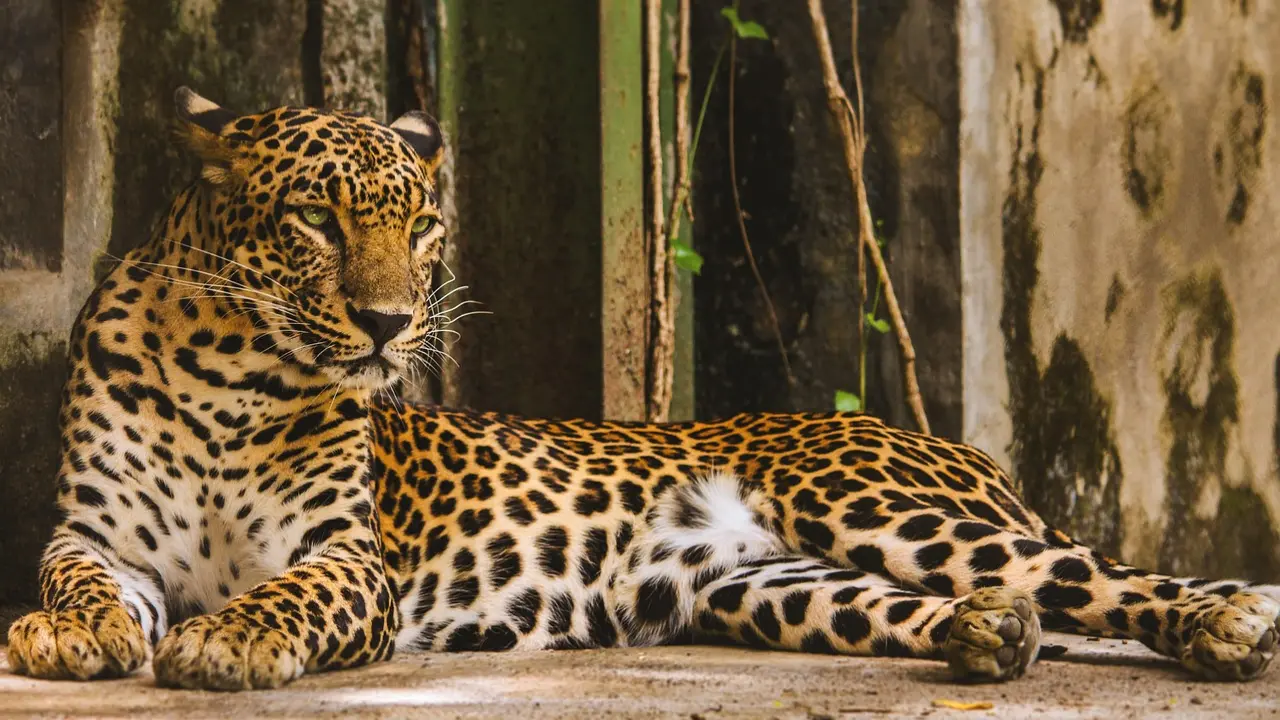
16 February,2026 09:41 PM IST | New Delhi | PTIA leopard died on Sunday after getting entangled in an old barbed wire fence erected around a private plot in the Patta land area of Coimbatore in Tamil Nadu. The incident occurred approximately 500 meters from the Poluvampatti Block I forest area, specifically within the Modamathi section of the Madukkarai Forest Range, Navakkarai Division, as the animal was exiting from the garden. Further details regarding the cause of death and the animal's condition will be provided following the results of a formal post-mortem examination. Meanwhile, in a horrific incident, a forest guard was killed, and another was injured after they were attacked by a rhino in Assam's Kaziranga National Park & Tiger Reserve on Sunday, officials said. The deceased forest guard was identified as Sahabuddin. According to the Kaziranga National Park authority, the incident occurred near the Bordoloni Forest Camp in the Kohora Range. Arun Vignesh, CS, DFO, and Deputy Director of Kaziranga National Park, said that the rhino attacked them near the Bordoloni Forest Camp area under the Kohora range at around 12 noon while they were on duty. "One of our staff members, Sahabuddin, a homeguard posted in Bordoloni Camp of Kohora Range, was attacked by a rhino at about 12 noon while on duty and passed away while being brought to Kohora hospital. In the same incident, another staff member, Ramen Borah, was injured and is currently being shifted to Jorhat Medical College & Hospital for treatment," Arun Vignesh said. Earlier on November 27, 2025, a four-and-a-half-year-old boy in the Nimgav area of Khed Tehsil, Pune, was attacked by a leopard near his house on Tuesday evening around 8:30 pm while he was playing, officials said. The child, identified as Devansh Gawhane, was reportedly grabbed by the neck and dragged for a few metres before locals intervened. The boy sustained injuries to his neck and face and was rushed to the government hospital in Khed for treatment. Later, his condition became stable. Forest officials have launched a search operation and increased vigilance following repeated leopard attacks in the area. This story has been sourced from a third party syndicated feed, agencies. Mid-day accepts no responsibility or liability for its dependability, trustworthiness, reliability and data of the text. Mid-day management/mid-day.com reserves the sole right to alter, delete or remove (without notice) the content in its absolute discretion for any reason whatsoever.
16 February,2026 01:09 PM IST | Coimbatore (Tamil Nadu) | ANIThe Jammu and Kashmir government has said the Jammu region has witnessed more than 1,760 forest fire incidents since FY 2023-24 till January 2026, affecting over 4,100 hectares. As per official data released by the forest and environment department, as many as 1,763 fire incidents were reported across 19 forest divisions in the Jammu region, involving 4,195.24 hectares of forest land during the period. According to the data, a total of 281 fire incidents were reported during 2023-24, affecting around 371.49 hectares. The number rose steeply in 2024-25, when 1,135 fire cases were recorded, affecting around 3,154.90 hectares across the region. During the ongoing financial year, up to the end of January 2026, 419 fire incidents have already been reported, with an affected area of about 668.85 hectares. The data shows that the East Jammu division recorded the highest number of incidents in 2024-25, with 488 cases affecting nearly 1,786.56 hectares, followed by the West Jammu division with 326 cases over 875.03 hectares, and the Chenab division with 321 cases impacting 493.31 hectares. In 2025-26 so far, the West Jammu division has emerged as the most affected, reporting 171 cases involving around 331.95 hectares, followed by East Jammu with 98 cases over 147.7 hectares, and the Chenab division with 150 cases affecting 189.2 hectares, the data said. Among individual divisions, Jammu, Udhampur, Ramban, Batote, Reasi and Rajouri consistently reported a high number of incidents during the period under review, while areas such as Samba, Billawar and NHIA Batote reported comparatively fewer cases. The government said the data underscores the growing challenge of fire incidents in the Jammu region and highlights the need for strengthened preventive measures, improved monitoring and faster response mechanisms to minimise damage to forests and property. This story has been sourced from a third party syndicated feed, agencies. Mid-day accepts no responsibility or liability for its dependability, trustworthiness, reliability and data of the text. Mid-day management/mid-day.com reserves the sole right to alter, delete or remove (without notice) the content in its absolute discretion for any reason whatsoever.
16 February,2026 10:49 AM IST | Jammu | PTIThe sunflower fields in the Bison Valley of Idukki have blossomed, with 40 acres of blooms drawing hundreds of visitors to the high ranges. The vast floral display has become a major attraction in the district, offering a breathtaking sight that fills visitors' eyes and hearts. Jijo Joseph Puthenveettil of Bison Valley has had a passion for farming and flowers since childhood. He planted flowering plants of various colours and shapes along the roadsides. In areas where paddy cultivation was once carried out continuously, many fields have now been left fallow due to a shortage of labourers. With the aim of reclaiming these fallow lands, Jijo leased a paddy field in Muttukadu and began sunflower cultivation on an experimental basis. As the initiative gained significant public attention and appreciation, he expanded the cultivation to one acre of his own farmland near Bison Valley. Initially, the seeds were sourced from Tamil Nadu. However, due to unavailability this season, the required seeds were brought from Karnataka. The sunflower garden is now open to visitors. A large number of tourists arrive daily to witness the blooming sunflowers and capture photographs. In addition to the sunflower fields, 24 varieties of bamboo collected and planted by Jijo from different places nearly 15 years ago now stand tall across the area, spreading shade and enhancing the beauty of the landscape. Idukki is one of the 14 districts of Kerala state, India, created on 26 January 1972. This beautiful high-range district of Kerala is known for its mountainous hills and dense forests. For the people of Kerala, Idukki is always associated with Power Generation. About 66 per cent of the State's Power needs come from the Hydroelectric Power Projects in Idukki. Idukki, in the Western Ghats of Kerala, is the second-largest district by area but has the lowest population density. Idukki has a vast forest reserve area; more than half of the district is covered by forests. Urban areas are densely populated, whereas villages are sparsely populated. Idukki is also known as the spice garden of Kerala.
13 February,2026 10:28 PM IST | Idukki (Kerala) | ANIADVERTISEMENT